
Bone Grafting in Lawrence, KS
When bone loss in the jaw threatens your oral health or the success of future dental procedures, bone grafting may be necessary to rebuild lost volume. At Jayhawk Dental, we offer advanced bone grafting techniques to restore jawbone integrity—supporting everything from dental implants to long-term oral function.

.svg)
.svg)
Restoring Bone Structure for a Stronger, Healthier Foundation
Whether you're planning for a dental implant or addressing deterioration after tooth loss, our experienced team—including Dr. Michelle Saunders, Dr. Justin Anderson, Dr. Lesley R. Nellor, and Dr. Mamdouh Yasin—will guide you through the process with precision, comfort, and care.

What Is Bone Grafting?
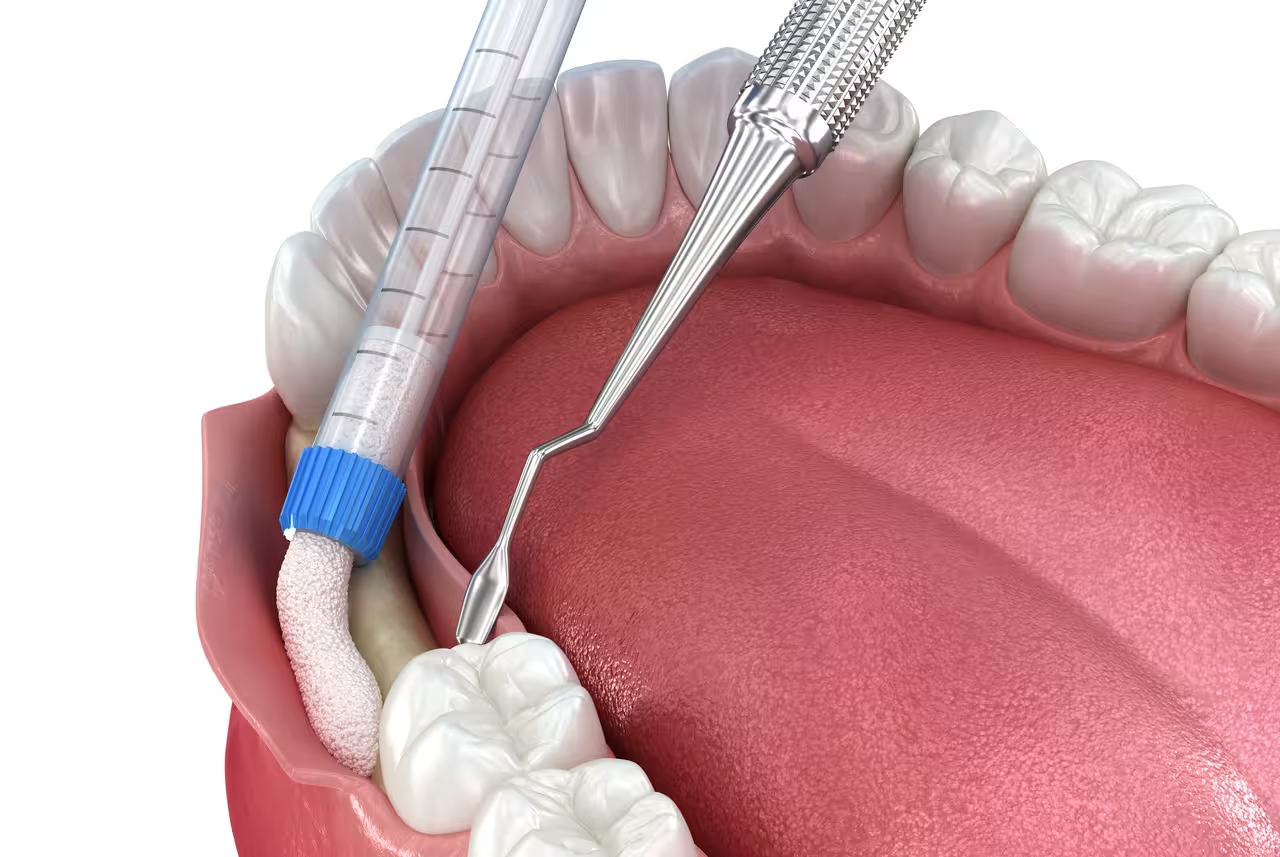
Bone grafting is a surgical procedure used to rebuild or regenerate bone in areas of the jaw where it has deteriorated. This is often needed when:
- A tooth has been missing for an extended period
- Trauma, infection, or periodontal disease has damaged bone
- You plan to receive a dental implant but lack sufficient bone structure
The procedure involves placing grafting material—either from your own body or a biocompatible donor source—into the affected area. Over time, your natural bone cells regenerate and integrate with the graft, rebuilding strength and volume.
Why Bone Grafting May Be Necessary
Bone loss in the jaw isn't always visible but can impact both oral health and facial appearance. Without adequate bone:
- Dental implants may not be viable without rebuilding the site
- Facial collapse may occur with long-term denture wear
- Teeth may shift or loosen, especially after extractions
- Bite function and alignment can be compromised
- Aesthetic changes to your smile or facial structure may develop
Bone grafting is often the first step in preparing for treatments like implant-supported dentures or All-on-4 implants.
Types of Bone Grafts We Offer
We tailor the grafting procedure to your needs, selecting the appropriate technique based on your jaw condition and goals:
- Socket Preservation – Placed after a tooth extraction to maintain bone at the site
- Ridge Augmentation – Rebuilds jaw contours where bone has thinned or collapsed
- Sinus Lift – Adds bone to the upper jaw near the molars, especially for implant placement
- Block Graft – A larger graft used in areas of significant bone loss
We’ll determine which type is right for you during your consultation and imaging review.
What to Expect from the Bone Grafting Process
1. Consultation & 3D Imaging
We’ll begin with an in-depth evaluation and digital imaging to assess your bone volume and plan the graft precisely.
2. Graft Placement
The procedure is performed under local anesthesia, with sedation options available. We place the grafting material at the targeted site and secure it as needed.
3. Healing & Regeneration
The area is left to heal and regenerate—this can take several months, depending on the extent of the graft. During this time, the new bone integrates with your natural tissue.
4. Follow-Up & Next Steps
Once the graft is fully healed, we can proceed with the next phase of treatment, such as dental implants or prosthetic restorations.
We’ll keep you informed throughout the process and monitor healing closely.
FAQs About Bone Grafting
Question text goes here
Answer text goes here
Is bone grafting painful?
The procedure is performed under anesthesia, and most patients report minimal discomfort. Post-operative symptoms are usually mild and well-managed with over-the-counter medication.
How long does healing take?
Bone grafts typically require 3 to 6 months to fully integrate, though this can vary depending on the size and location of the graft.
Is bone grafting required for all implants?
Not always. If you’ve recently lost a tooth or have good bone density, a graft may not be necessary. We evaluate this on a case-by-case basis.
What materials are used in bone grafts?
We use either autografts (your own bone), allografts (donor bone), or synthetic, biocompatible materials. All are safe, effective, and tailored to your needs.
Is this procedure covered by insurance?
Some dental and medical plans cover bone grafting if it’s medically necessary. Our team will verify your benefits and offer financing options to ensure affordability.
Still have questions?
Build a Strong Foundation with Bone Grafting in Lawrence, KS
If you’ve been told you’re not a candidate for dental implants due to bone loss—or you’ve experienced changes after tooth extraction—bone grafting may be the essential first step toward restoring your smile.
Call (785) 843-9122 or request a consultation online today.
We proudly welcome patients from Lawrence, Eudora, Baldwin City, Tonganoxie, De Soto, and surrounding communities at 826 Iowa St, Lawrence, KS 66044.

.svg)